
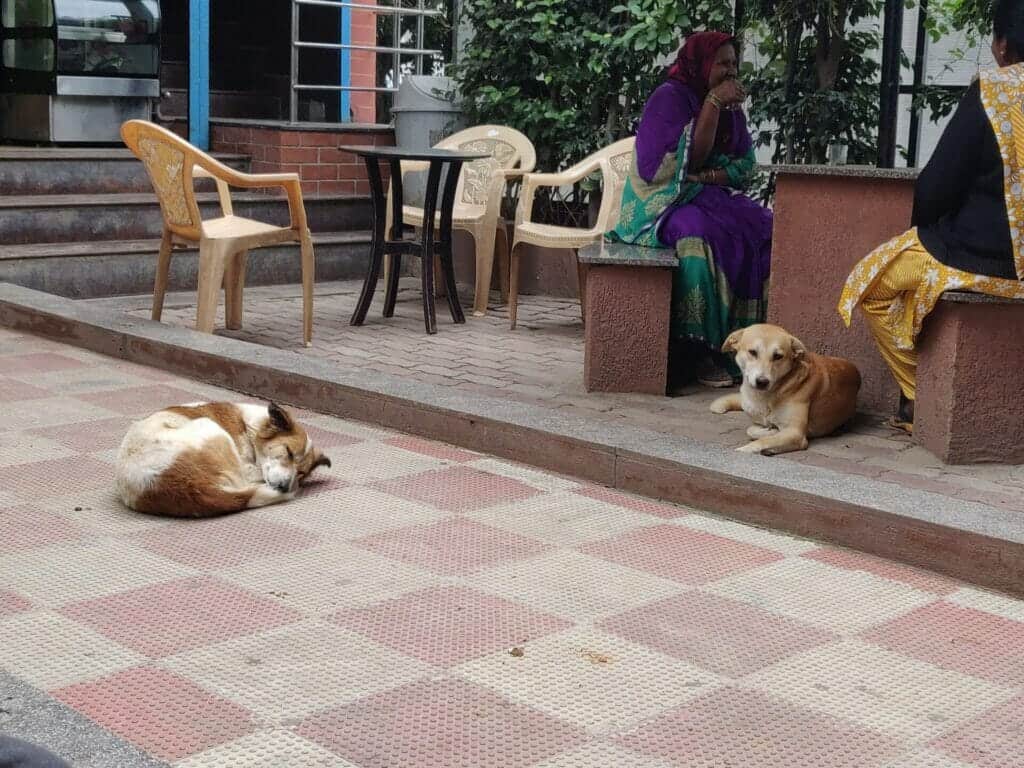
In cities across India, the presence of community animals has often been framed as a battle, pitting animal caregivers against residents concerned for public safety. In order to relook at this premise, we invited three speakers from Bengaluru, Mumbai and Chennai to share their experiences and learnings regarding peaceful coexistence with street dogs in their respective locales. By leveraging community guardianship and scientific management, their initiatives have proven that humane coexistence of humans and canines can be a scalable reality.
The Power of the Hyper-Local Model
A cornerstone of this transformation is the hub-and-spoke model pioneered by Priya Chetty-Rajagopal in Bengaluru. Instead of relying solely on centralised municipal efforts, this model utilises 63 (and growing) decentralised Canine Squads constituted by CJ Memorial Trust. They are self-governed and often self-funded, ensuring that animal welfare issues are addressed by the people who know the neighbourhood best.
The success of these squads is rooted in what Priya calls the “simple math of coexistence”. By focusing relentlessly on high-intensity Animal Birth Control (ABC) and Anti-Rabies Vaccinations (ARV), communities can move from a state of constant crisis—marked by puppy mortality and dog bites—to a stable environment. When a neighbourhood reaches optimum sterilisation, aggression drops significantly, and the community becomes safer for everyone.
Youth-Led Transformation and “EQ”
The movement is also gaining ground on academic campuses. Dr Deepa Shivaji Jamindar of Friends of Canine Club at Thakur College in Mumbai demonstrates the power of youth engagement. Dr Jamindar emphasises that while traditional education focuses on IQ, animal welfare initiatives develop a student’s Emotional Quotient (EQ) and sensitivity.
The impact of this student-led initiative is tangible. In just two days, students raised over ₹70,000 for animal welfare, which was used to vaccinate 100 dogs and provide reflective radiation belts to prevent accidents. Perhaps most impressively, the club facilitated 13 successful adoptions of community dogs by students and their families.
Feeding as a Tool for Public Health
One of the most misunderstood aspects of animal welfare is feeding. Volunteers Virali Ganesh and Balakrishnan from Chennai pointed out that feeding is the essential first step in any sterilisation drive. A dog that is not fed is difficult to catch and often too weak for surgery; feeding builds the trust and immunity required for effective medical intervention.Furthermore, educating the public on how to recognise a neutered dog—indicated by a simple ear notch—is a critical game-changer. When residents understand that an ear-notched dog is vaccinated and unable to produce puppies, the fear factor often melts away.
Bridging the Civic Divide
One of the most common complaints heard was about dogs barking incessantly at night, disturbing the peace of the neighbourhood. A simple solution suggested was to have a resident, whom the dog trusts, step in and reassure the dogs to calm them down.
Successful coexistence requires addressing the concerns of all citizens, including those troubled by noise or hygiene issues. The speakers advocated for a responsible pet parent charter and stricter implementation of civic rules regarding leash use and waste disposal. By avoiding polarisation and focusing on shared civic sense, communities can ensure that dogs are seen as adding value to the neighbourhood, rather than creating a nuisance.
The ultimate goal should be the safety of all — humans and animals, not one or the other. Through empathy and structured, pragmatic community action, Indian cities can move towards a more compassionate and scientific way of living alongside their community animals.