
The India Civic Summits of 2024 and 2025 gave us more than just the motivation to reconvene this year–they gave us momentum. This year’s edition held on 14th February brought together active citizens, changemakers and experts in a vibrant day-long event in Chennai.
The chosen theme for the India Civic Summit 2026 was Urban Governance– the foundation that shapes our cities. Citizens engage with public officials both for service delivery needs as well as neighbourhood improvements and city-level policy making. It felt both timely and necessary to place urban governance at the centre of the conversation, to acknowledge the critical role of citizens in driving transformation, and showcase the power of citizen agency in addressing India’s urban challenges.
Welcome and opening remarks
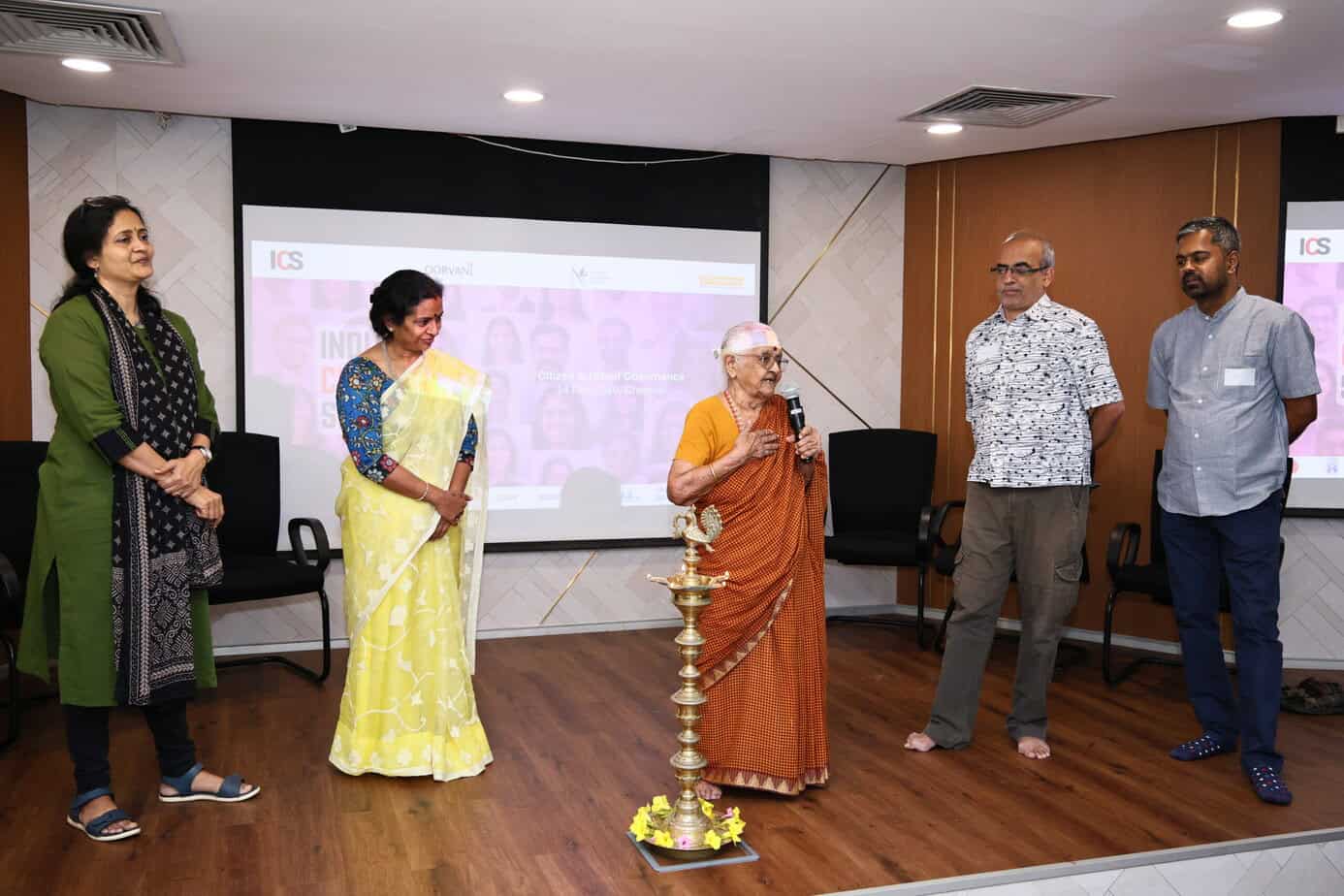
We invited Kamakshi Subramanian, a 97 year old active citizen to light the lamp and begin the day.
We had opening remarks by Dr Lakshmi Narasimhan, Director of Research at the Banyan Academy of Leadership in Mental Health who challenged us to look at our cities not just as maps of infrastructure, but as environments that shape our mental well-being. Drawing from two decades of work with people facing homelessness and mental health challenges, she urged the official governing bodies to create pathways for participation of those at the margins, to make room for inclusion. That would allow for people to not just be subjects of a system but shape them.
Lakshmi introduced a beautiful concept: “Hope Infrastructure”. This refers to the systematic creation of opportunities where people have meaningful everyday experiences.
Reclaiming citizens’ right to the city
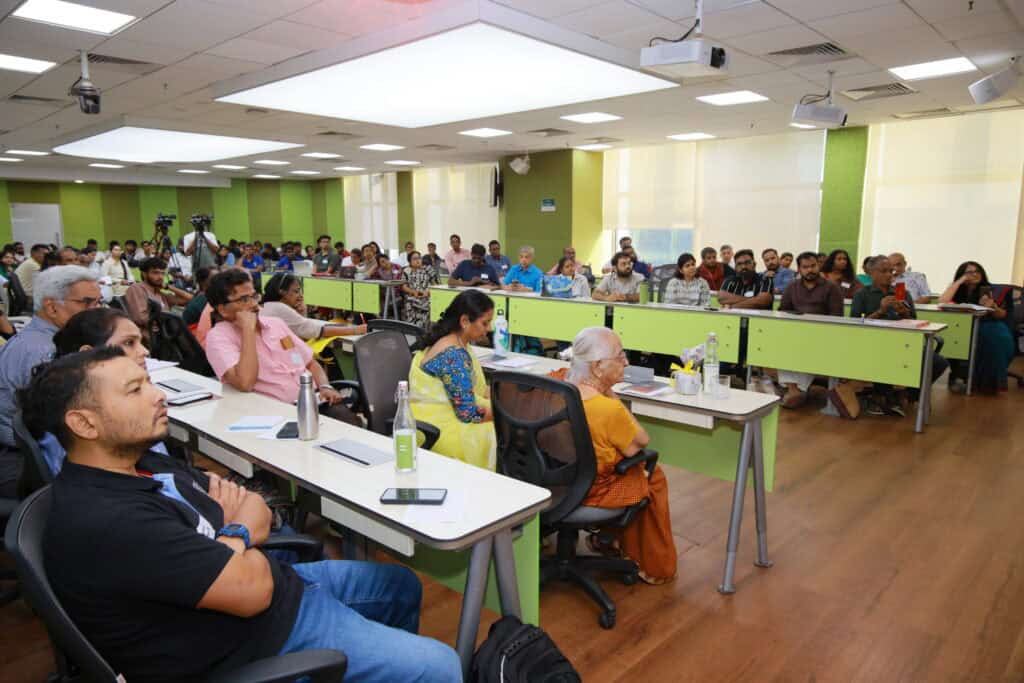
Former Shimla Deputy Mayor Tikendar Singh Panvar in his keynote address ‘Reclaiming citizens’ right to the city’ offered a critique of the modern Indian city, which he said is imploding with mistrust and inequality. He observed that today’s cities are being run on “entrepreneurial” models that often prioritise real estate and privatisation over the commons. In this shift, fundamental rights like water and education have been transformed into needs served by private capital.
To fix this, Tikendar argued we must go beyond the current limitations of the 74th Amendment and re-imagine the “Right to the City”. He highlights his work from the Kerala Urban Commission, including: City Cabinets–Empowering local mayors with a dedicated planning and governing cabinet, Worker Councils, including migrant workers and Youth Participation by reserving 25% for those under 35 in city councils
Tikendar mentioned that urban governance is not just about efficiency; it’s about reclaiming democratic spaces from extractive capitalism and ensuring that the people, not just bureaucrats, actually run their cities.
Inside the city government
The panel discussion “Inside the City Government” explored the structural, technological, and social challenges inherent in Indian urban governance, emphasising that while data and technology are useful, they cannot replace institutional accountability and inclusive planning.
The panel highlighted a constitutional paradox: while cities are envisioned as self-governing, they remain state subjects, leading to governance fragmentation across multiple agencies with no single accountable authority. Panelists noted that while Mumbai’s 1916 portal is a model for grievance redressal, most cities suffer from disjointed systems that fail to integrate departments like water boards and municipal corporations.
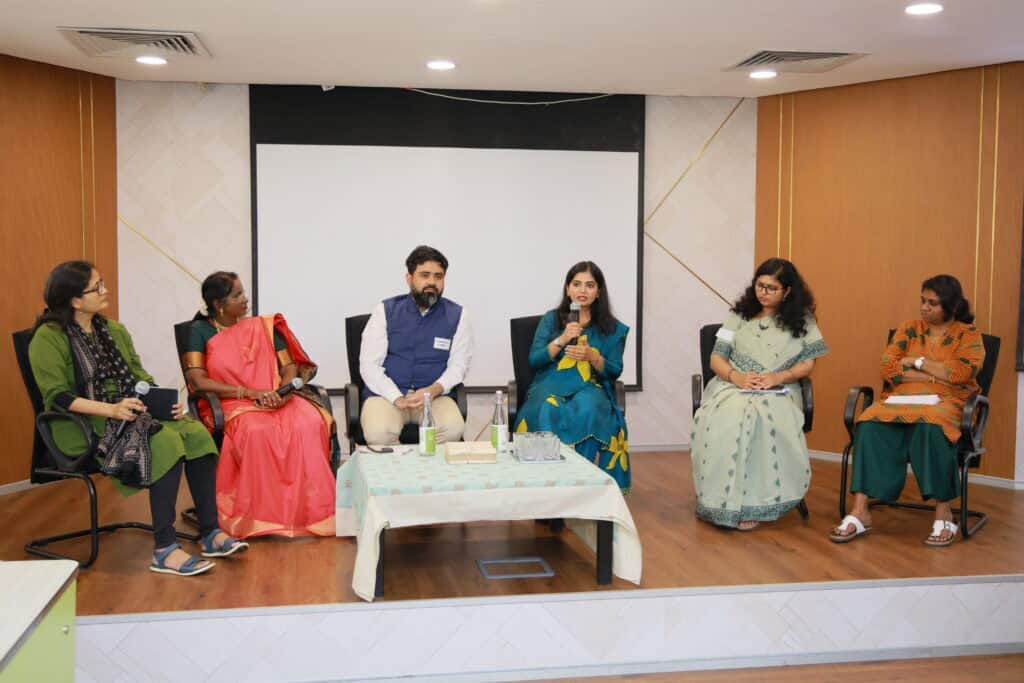
Panelists concurred that digitisation is not a silver bullet. They argued against the push for confusing, non-functional apps, suggesting instead that we analyse grievances data over time to plan proactively. E.g., city corporations can take up desilting drains before monsoons rather than take up emergency repairs reactively. People get tired of answering the same questions and stop trusting the process when they never see real changes or results from the data they provided.
The discussion concluded that urban issues are often rooted in exclusion and that systems end up prioritising administrative efficiency over accountability.
We then had civic leaders facilitate discussions about five topics–Water and Lakes, Waste management and Sustainability, Enabling Inclusion, Urban design and Livability and Transport & Road Infrastructure, each topic intersecting with Urban Governance. These discussions brought out individual pain points from different parts of the city and discussed solutioning.
People continued exchanging ideas and exploring ways to work together over lunch, the enthusiasm was palpable.
Interactive sessions
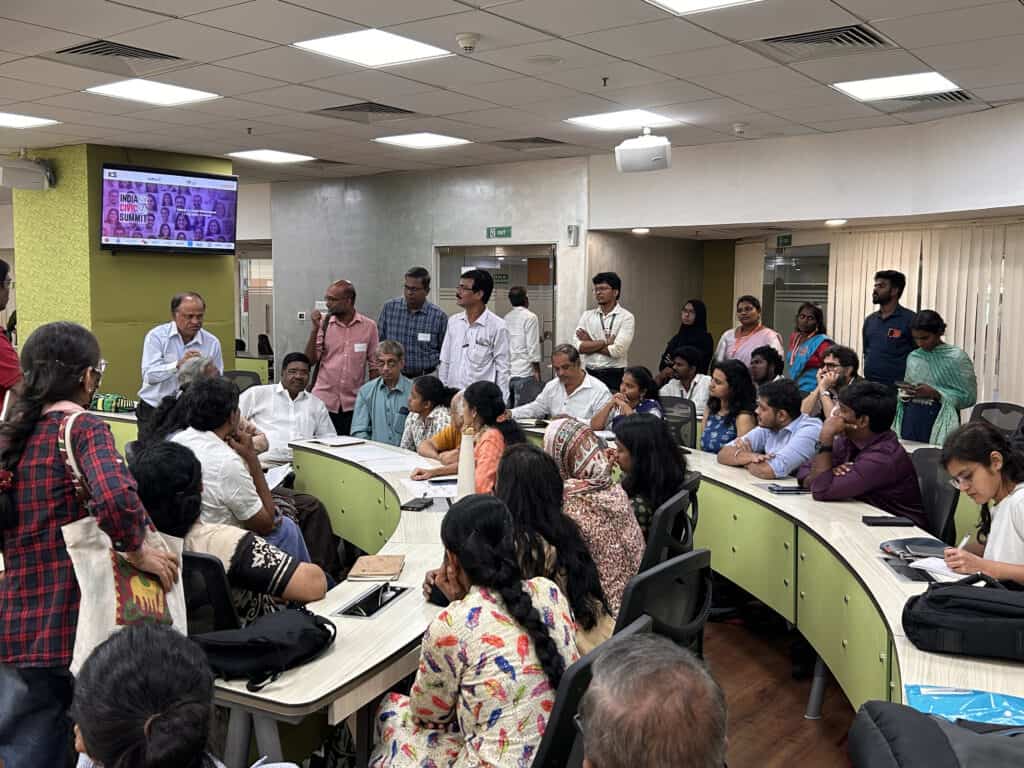
In the ‘Tools of Civic Engagement’ session, Charu Govindan from Voice of People explained the structure of area and ward sabhas and their hierarchies, where and how you can participate, how frequently the meetings should happen and what gets discussed in these meetings. Prashanth Goutham from Arappor Iyakkam explained the process of submitting an RTI and how to do it in a way that leads to successful responses and what qualifies under RTI. Alaksha, Sukirat and Akalya from Civis demonstrated what public consultations should and should not look like before a bill gets passed.
At the ‘Design Your Ward: A Democracy in Action simulation’, participants explored how to manage a ward. Five teams were assigned specific civic issues and asked to develop practical action plans. However, there was a twist–the total budget was capped. This constraint pushed the teams to debate, negotiate, and make tough choices about which proposals to retain and which to drop. In the process, they learned to prioritise and allocate limited resources to best serve their ward.
In the session on Youth Engagement in City Planning and Governance, Sarath from Vyasai Thozargal and Venika from YLAC explored the use of education models to capture interest, making civic engagement aspirational, facilitation for imagining better circumstances, how to inculcate the spirit of interrogation and getting involved in more systemic opportunities like internships. The session was moderated with insights from Divya Narayanan of Jhatkaa.
“A life with dignity must be the foundation of social equity”
Dr Palanivel Thiaga Rajan in his address, highlighted that a life with dignity must be the foundation of social equity. He expressed concern over the exponential complexity of expanding cities, noting that magnificent visions often fail due to poor execution and a lack of institutional memory.
Dr PTR as he is popularly referred to championed devolution, citing the success of a decentralised school breakfast scheme managed by local volunteers, which proved more efficient than centralised models.
He also warned that structural fixes are insufficient without civic awareness. He identified a vicious cycle where governance failure leads to bad behavior from citizens, such as resource theft or encroachment. Ultimately, sustainable cities require political leadership that fosters trust through outcomes and a shared sense of civic responsibility.
Over the course of the day, we had heard from policy makers, leaders within the governance system and organisations that bridge the gap to citizens. But the day would not be complete without honouring the extraordinary and inspiring work done by citizen groups across the country.
Spotlighting stories of change
We recognised and celebrated 26 community and citizen initiatives focused on causes central to the well-being of their cities. The groups worked in the domains of waste management, water bodies, mobility, urban forests, and other social issues. Read more about them here.
Special guest Dinesh Victor, Founder, SIP Academy shared the starfish story reminding attendees that while they cannot solve every problem for the population of their cities, their local impact is vital. The summit concluded with a moving address by lifelong activist Kamakshi Paati, who expressed renewed hope for the country’s future.