
Potholes and poorly maintained roads are a recurring problem across Chennai, affecting motorists and pedestrians alike. Beyond the inconvenience, poor road conditions raise serious concerns about road safety, public expenditure, contractor accountability and the functioning of civic institutions.
To understand how road complaints are handled and what citizens can do to seek accountability, Oorvani Foundation organised a webinar titled Fixing Potholes: The Journey Through Chennai’s Civic System. The discussion brought together Shhiva and Sachin George, convenors of Road Rash India, Radhakrishnan from Arappor Iyakkam, and architect and urban planner Pavithra Sriram. The speakers examined citizen complaint mechanisms, road maintenance practices, fragmented governance and avenues for accountability.
From citizen complaints to collective action
Shhiva and Sachin George from Road Rash India shared their experiences documenting potholes and poor road conditions across Chennai and filing complaints through the Namma Chennai app. Their efforts have revealed a significant gap in action taken against complaints filed through the app . While complaints generated acknowledgement receipts, there was little clarity on progress or whether they reached the appropriate officials. In several instances, action followed only after videos of damaged roads gained visibility on social media.
The speakers highlighted the need for transparent complaint-tracking systems, with clear timelines and automatic escalation when issues remain unresolved. They emphasised that accountability cannot rest on a handful of activists; citizens must collectively document road conditions, file complaints and consistently follow up with authorities.
Understanding road maintenance and accountability
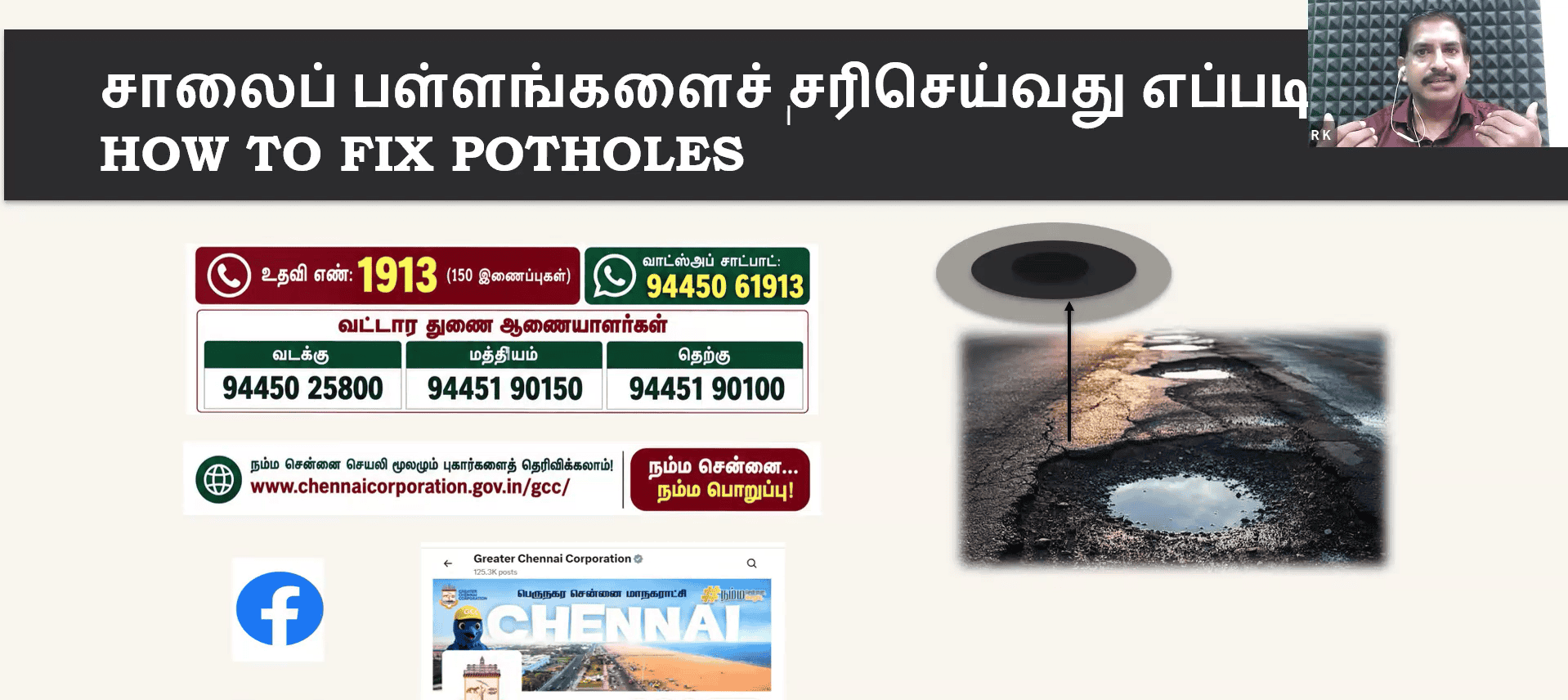
Radhakrishnan from Arappor Iyakkam, through his presentation, outlined how citizens can systematically report road damage and pursue accountability.
Before filing a complaint, citizens should collect photographs or videos of the pothole, record its exact location and document associated risks such as heavy traffic, water stagnation or accidents. Maintaining records of complaint dates, complaint numbers, official responses and photographs after repairs is equally important. If the pothole returns or the danger continues, these records can be submitted to higher authorities or appropriate grievance bodies. He also touched upon noting the warranty status of the damaged roads specified in the contracts, which become key touch points for complaint resolution.
He also highlighted the Right To Information Act (RTI) as a tool to access details about road contracts and expenditure, quality inspections and complaint records. Such information can help citizens identify responsible contractors and question whether prescribed quality checks have been conducted.
His presentation also introduced key components of road construction and maintenance, including cold milling, mix macadam, tack coat, bituminous concrete, road markings, road studs, speed breakers and drainage components. Understanding these elements can help citizens assess whether road works are being carried out properly and whether repairs address recurring damage. He also talked about the warranty for roads mentioned in the contract.
The challenge of fragmented road governance
Pavithra Sriram examined why road complaints often become difficult to resolve, highlighting Chennai’s fragmented road-owning and maintenance structure. Roads are managed by different agencies, including the Greater Chennai Corporation, State Highway and National Highway authorities, each with different administrative structures and responsibilities.
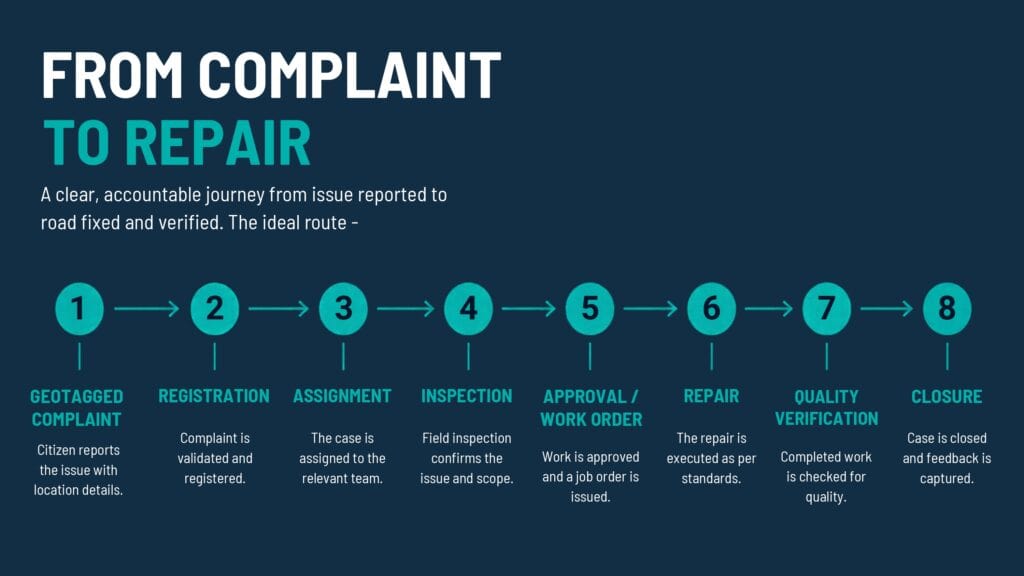
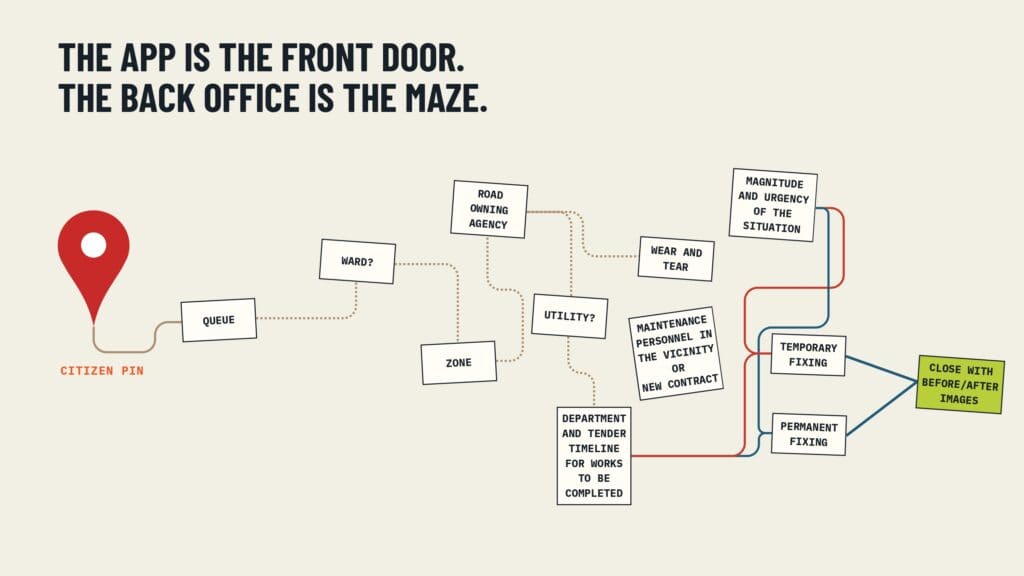
She explained how this fragmentation makes it difficult to identify the appropriate authority and ensure accountability. Coordination becomes particularly challenging when agencies such as CMDA (Chennai Metropolitan Development Authority) undertake utility works that require roads to be dug up. Inadequate restoration, temporary patchwork and poor coordination can cause roads to deteriorate again.
Pavithra also highlighted how the visibility and urgency of an issue often determine how quickly it receives attention. While major problems such as sinkholes may prompt immediate action, smaller road defects can remain unresolved within the administrative process.
To address these challenges, she proposed bringing urban roads under a single road-owning authority and establishing a dedicated road maintenance agency. She also highlighted the role of the Chennai Unified Metropolitan Transport Authority (CUMTA) in coordinating road-related works across departments. A unified digital platform supported by GIS mapping could help identify the agency responsible for each road, track infrastructure works and improve transparency in complaint resolution.
Concerns raised by citizens
Participants raised questions about contractor accountability, road repair warranties and the quality of patchwork. Uneven road surfaces, poorly maintained stormwater drain covers and infrastructure obstructing pedestrian movement emerged as other key points of concern. These experiences reinforced the need to consider road maintenance as a larger urban safety and accessibility concern.
The way forward
The webinar highlighted that fixing potholes requires more than filling damaged portions of a road. It requires understanding recurring damage, ensuring proper construction and maintenance practices, improving coordination between government agencies and creating transparent mechanisms for accountability.
The speakers emphasised the importance of citizens documenting road conditions, filing complaints, retaining acknowledgement numbers and consistently following up with authorities. RTIs can help uncover information about contracts, expenditure and quality checks, while collective citizen action can create greater pressure for institutional change.
The central message was clear: road safety and maintenance are public responsibilities. A pothole should not require a viral video to receive attention, nor should its repair depend on repeated complaints. Chennai needs a more transparent, coordinated and accountable road maintenance system, supported by informed and actively engaged citizens.