
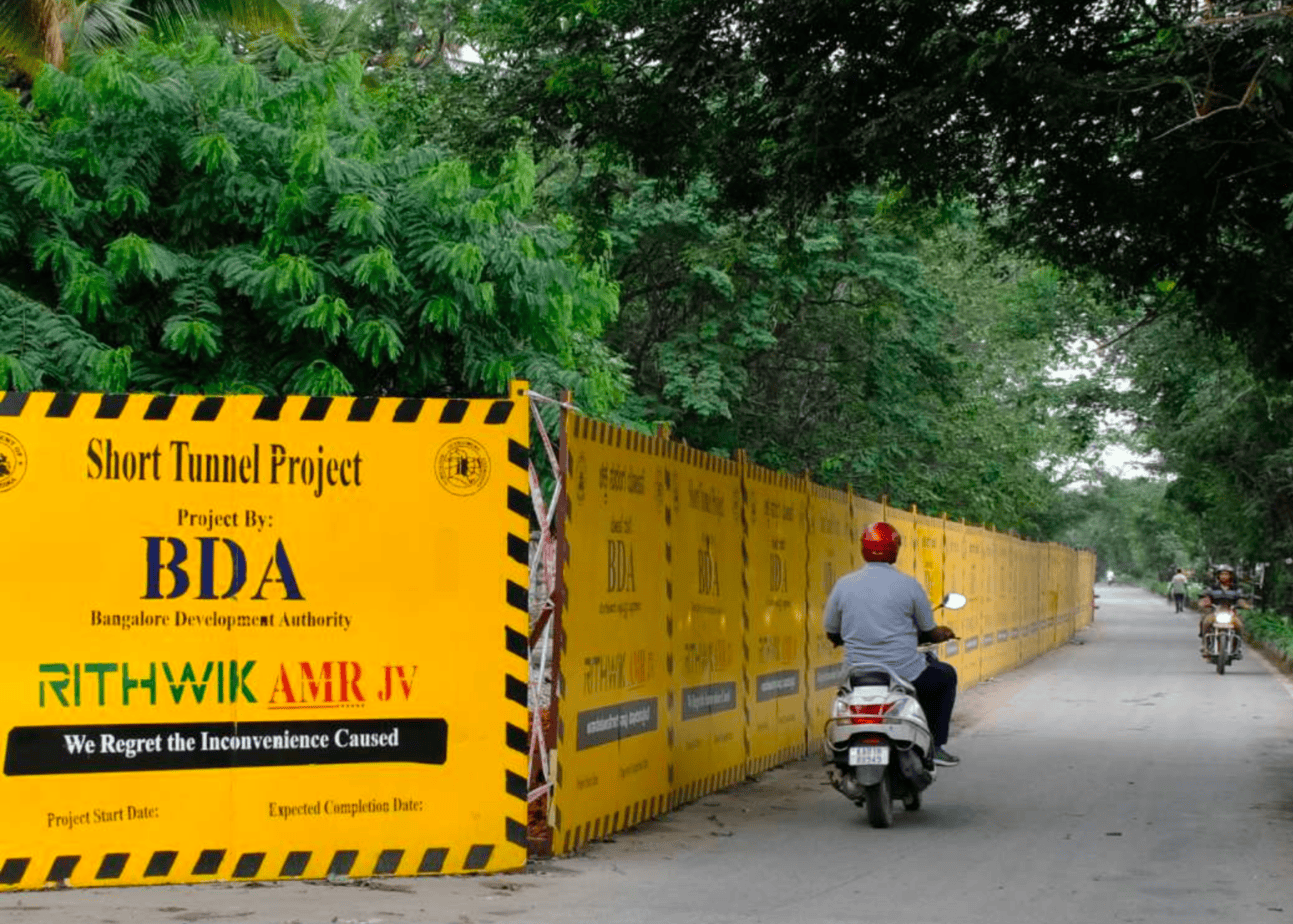
Bengaluru is grappling with a deepening mobility crisis marked by congestion, disconnected road networks, and inadequate public transport. In response, the government has turned to large-scale road infrastructure projects such as highways, elevated corridors, and tunnels. The Hebbal Short Tunnel Project exemplifies this approach, raising concerns about its cost, environmental impact, and democratic legitimacy.
Oorvani Foundation brought together experts and citizens in a webinar on 26 August 2026 to examine the objectives, status, and implications of this Short Tunnel Project, which is proposed as a three-lane, bi-directional underpass connecting the Hebbal flyover junction to the Veterinary College through GKVK premises.
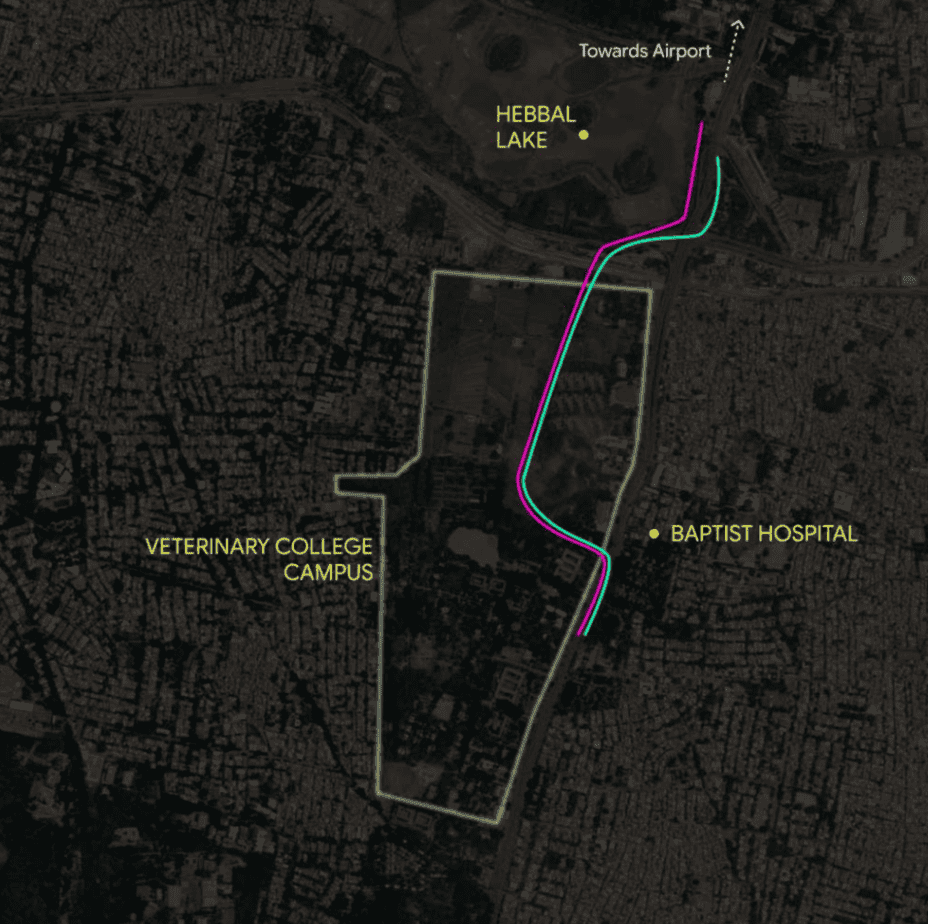
Positioned as a temporary solution while the larger Hebbal–Silk Board Tunnel Road remains stalled, the 2.2 km tunnel is estimated to cost Rs. 1385.29 crore. Despite a pending case in the Karnataka High Court citing a lack of environmental impact assessment, construction has begun, with completion expected in 18 months. But given the absence of any form of citizen consultation on the project highlights serious governance gaps.
The webinar brought together a mobility expert and active citizens to provide Bengaluru citizens with an overview of the short tunnel project and the larger pattern of how infrastructure projects are being carried out in a city that has been without elected corporators for nearly a decade. Dr. Ashish Verma presented a traffic impact study, Elizabeth Soumya outlined ecological concerns, and Rishvanjas Raghavan discussed fractured mobility planning under the GBA and the underutilisation of BMLTA.
Bengaluru’s Mobility Crisis & Tunnel Road Solutions
Dr. Ashish’s study challenges the assumption that adding road capacity reduces congestion. He categorises the tunnel as a grade separator, which often shifts congestion rather than eliminating it. The DPR reveals several problems: bottlenecks from a six-lane road narrowing to three lanes, queue spillback into the tunnel, sharp curves requiring reduced speed, flooding risks at low-lying entrances, and the absence of emergency evacuation provisions. He further argues that such projects prioritise vehicles over people. A metro line, for instance, could carry 69,000 passengers per hour per direction compared to 1,800 by road lanes, at far lower long-term costs. The study underscores that integrated public transport is the most efficient and sustainable solution.
Environmental Impact & the Failure of Participatory Governance
Ecological concerns are equally pressing. Elizabeth Soumya highlights that the tunnel route cuts through green public and institutional spaces, including 3.5 acres of Hebbal Lake and the Veterinary College campus. Hebbal Lake is vital for groundwater recharge and flood control, while the area supports woodland, grassland, mature trees, and diverse wildlife. Over 1,450 trees face felling, yet no environmental assessment has been made public despite funds being allocated in the DPR. Construction continues regardless of these ecological sensitivities.
The project also reflects fractured mobility planning in Bengaluru. Rishvanjas notes that while road infrastructure is needed, projects must be integrated with metro, suburban rail, BMTC buses, and walking infrastructure. The BMLTA was created to coordinate such planning but remains underutilised. Instead, multiple massive projects—elevated corridors, ring roads, and tunnels—are being pursued in isolation, often with laws altered to accommodate them. Governance is fragmented among the GBA, corporations, and separate agencies, with little citizen involvement.
The Way Forward
The way forward lies in rethinking mobility planning as a question of environment, accessibility, equity, and quality of life. The tunnel project fails to address these dimensions. Dr. Ashish Verma argues that Bengaluru requires a dense, spider-web-like public transport network combining metro, suburban rail, walkable streets, and last-mile connectivity. Only when transportation in a city is planned collectively will it be successful.
Citizens must mobilise, petition, and demand accountability in how infrastructure decisions are made. The Hebbal Short Tunnel Project is thus not just about one road but about the larger structural problem of fractured governance in Bengaluru — one that can only be addressed when citizens demand greater accountability in how the city is governed.