
The Pallikaranai watershed region, located in the Kovalam sub-basin, is one of South Chennai’s most flood-prone areas during the monsoon. Rapid urbanisation, shrinking wetlands, poor drainage, sewage pollution and fragmented planning have increased ecological and flood risks across the region.
Several citizen groups, resident welfare associations, researchers and civic organisations have been working on these issues — from lake protection and sewage diversion to flood mitigation and waste management. However, much of this work has been happening in different neighbourhoods, often in silos.
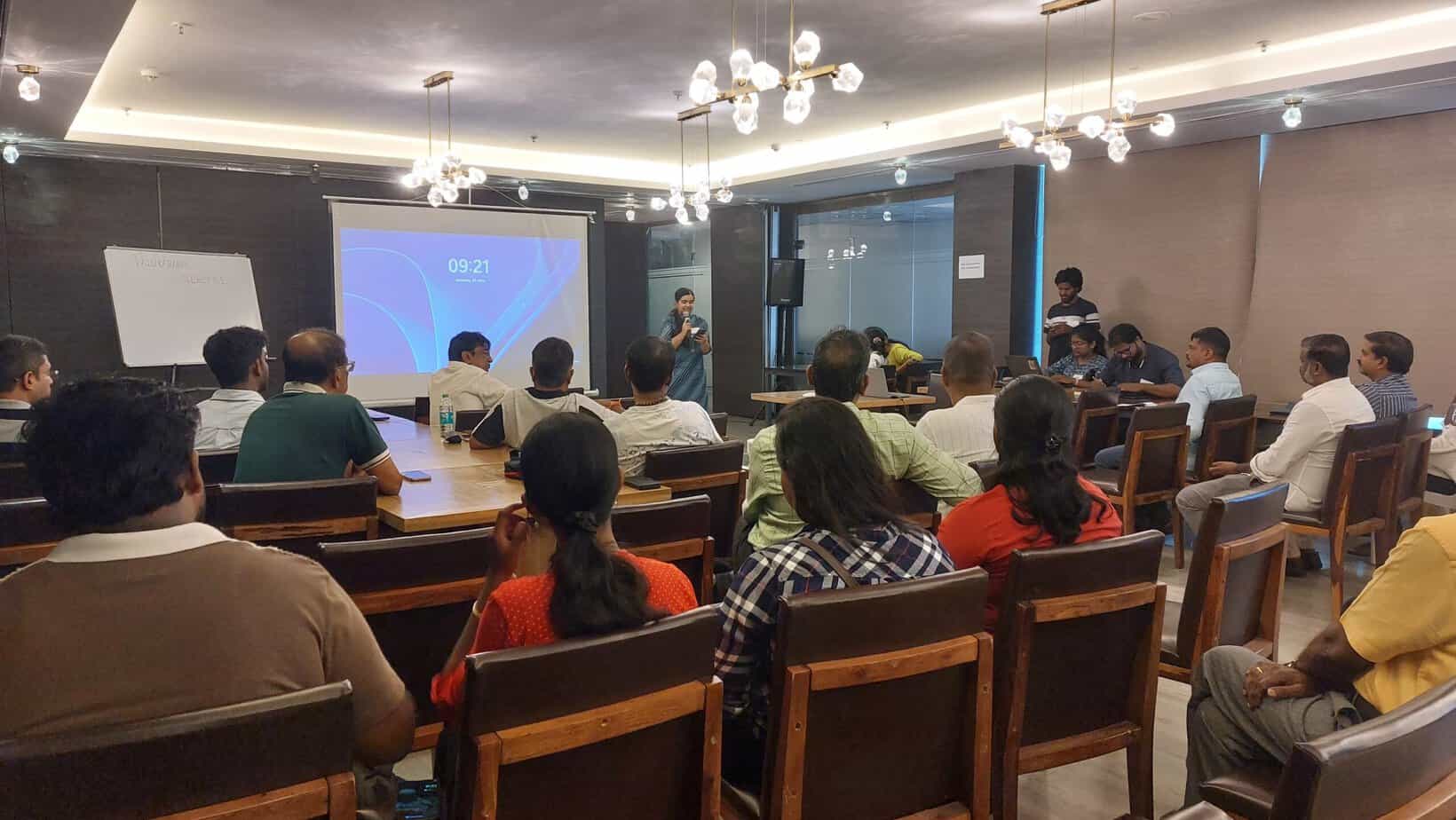
To create a shared platform for these efforts, Oorvani Foundation and Chennai Wetland Action Collective organised a half-day strategy session on the Pallikaranai watershed region on June 20, 2026, at IIT Madras Research Park. The meeting brought together groups working across the watershed to share ongoing work, identify common concerns and begin consolidating demands for government agencies.
The session began with a welcome address by Meenakshi Ramesh from Oorvani Foundation, followed by an introduction to experts by Lakshmi from Oorvani. Raju and Benisha from Chennai Wetland Action Collective set the context for the discussion by introducing the Pallikaranai watershed and stressing the need to understand the interconnectedness of its lakes, canals, marshes and drainage channels.
Catchment-wise concerns and demands
The discussions were organised around different catchment areas of the Pallikaranai watershed.
In the north-west catchment, covering Selaiyur, Nanmangalam and Narayanapuram lakes, participants raised concerns about sewage entering lakes, narrowed inlet and outlet canals, incomplete restoration work, dump yards near water bodies and encroached outlet channels. Key demands included intercepting sewage before it enters lakes, proper desilting, clear demarcation of lake boundaries, fencing where required, removal of dump yards, proper operation of regulator shutter gates, and avoiding construction-heavy beautification in lake restoration projects.
In the west catchment, covering Madambakkam, Thiruvenchery and Perumbakkam lakes, residents highlighted the impact of large real estate layouts, raised land levels, blocked outlet canals, confusion over Ramsar site boundaries and flooding in apartment complexes. Participants demanded protection of lake boundaries and buffer zones, withdrawal of projects that would concretise lake bunds, reconsideration of STP and land pooling proposals near water bodies, removal of encroachments in outlet canals, and a holistic flood mitigation study for the Pallikaranai marshland region. Concerns were also raised about basement parking approvals in flood-prone areas.
In the north catchment, covering Adambakkam and Velachery, the focus was on the 6-vent water course near Tansi Nagar. Residents pointed out that this channel drains water from a large surrounding area but remains blocked by debris and encroachments. The demands included clearing the mud block, desilting the canal and 6-vent water course, removing obstructions, widening stormwater drains near Perungudi station and scrapping projects that would interfere with the natural waterway.
In the south catchment, covering Thalambur, Navalur and Karanai lakes, participants spoke about OMR acting as a ridge that interrupts natural water flow. Concerns were raised about missing or inadequate canals, poorly connected downstream outlets, sewage and waste dumping in canals, compound walls blocking water flow, and flooding in residential layouts every monsoon. The proposed Sports City project on low-lying marshy land was also flagged as a major flood-risk concern. Demands included reconsidering such projects, restoring downstream connections, desilting key lakes and canals, and ensuring that lake restoration includes outlet and downstream planning.
Thematic discussions
After the catchment-wise discussions, CWAC consolidated the recurring issues and demands for further work on a report to be submitted to authorities.
The major themes that emerged among demands were:
- Calls for canal linkages & preventing blockages
- Flood mitigation & water shortage issues
- Sewage & waste management related demands
- Solutions regarding encroachment.
The Collective members elucidated on protecting the natural hydrology of the watershed, stopping sewage and solid waste from entering lakes and canals, restoring inlet and outlet channels, preventing construction on foreshore areas, and avoiding restoration projects that prioritise beautification over ecology.
Participants also highlighted the need for better coordination between agencies such as GCC, Tambaram Corporation, CMDA, WRD, revenue departments and panchayats. Many water bodies fall across multiple jurisdictions, making accountability weak and delaying action.
Waste management was another key concern. Madhuvanthi from Alliance for Incinerator-Free Chennai explained the issues with waste-to-energy projects and proposed decentralised waste management through the Green Chennai Initiative. Resident groups also called for removal of dump yards, decentralised solid and liquid waste management, and reconnection of fragmented marsh areas.
Comments by experts
Uday from Uvagai Foundation stressed that elevation maps are critical to understanding flooding in the Pallikaranai watershed. He also cautioned against projects that directly link canals to the sea without adequate ecological study.
Nandakumar, CEO of the International Centre for Clean Water, said research, validation and training are essential for scientific lake restoration, and offered support for studies and policy-level interventions.
Dr Janakarajan, President of SaciWATERS, said inter-departmental coordination is critical and suggested that the Pallikaranai Collective should become a legally registered body. He also said apartments and real estate companies must take responsibility for solid and liquid waste management.
Radhakrishnan from Arappor Iyakkam called for the Thirupugazh Committee report to be released to the public. He also advised citizen groups to use RTIs to access water body lists and survey numbers, and to focus on stopping sewage and waste from entering lakes.
Dayanand from Chitlapakkam Rising emphasised the importance of buffer zones, development control rules, catchment-based mapping, automation of inlet and outlet flows, and a comprehensive flood mitigation plan.
Dr TD Babu from SPARK said further development projects in and around the Pallikaranai marsh must be stopped, as the wetland has shrunk to less than 10% of its original area. He emphasised that the marsh should be brought under the Wetland Authority, with single-point protection instead of fragmented ownership by multiple agencies. He also called for implementing NGT directions, preventing wetland reclassification, restoring channels that bring water into the marsh, replacing fragmenting roads with cable bridges, desilting and broadening Buckingham Canal up to Marakkanam, and avoiding short-cut drainage channels that could damage both the marsh and coastal habitats.
Muthu Karthik from Care Earth Trust cautioned that deepening wetlands or clearing lake bottoms completely can damage their ecology. He stressed that restoration must be scientific and based on the ecological history of each wetland.
Deepak from Suzhal Aarivom said Pallikaranai must be understood as an ecosystem, not merely as a drainage channel. He raised concerns about channelising the marsh, desilting the core marsh, eco-parks, roads, boundary walls, stormwater drains, tidal influence, salinity intrusion and biodiversity decline.
Looking ahead
The Pallikaranai Collective meeting showed that flooding, sewage, encroachments, waste and unscientific restoration are not isolated neighbourhood issues. They are connected across the watershed.
The next step is to consolidate these concerns into a common report for government agencies. The collective demand is clear: Pallikaranai must be planned and protected as a living watershed, with its lakes, canals, marshes, buffer zones and floodplains treated as one interconnected ecological system.