
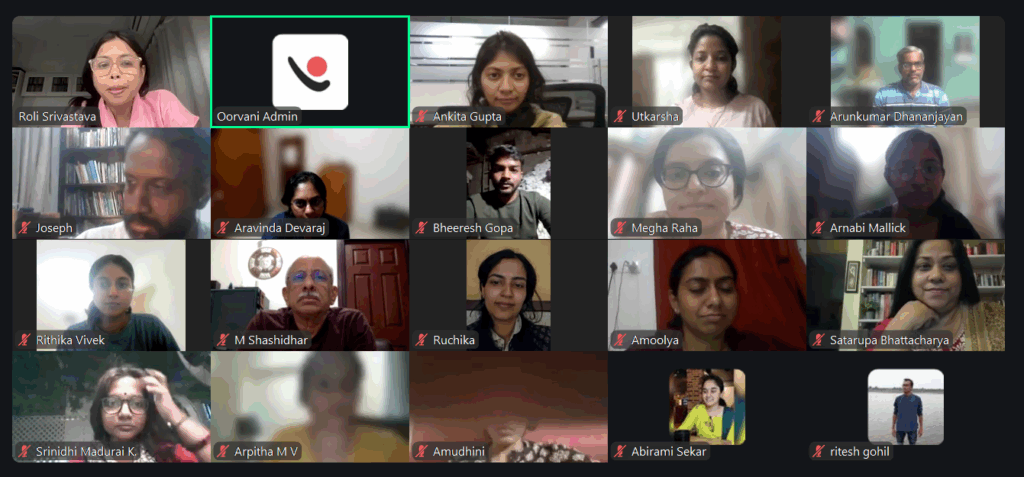
The last month of 2025 saw Oorvani Foundation host the Everyday Stories Lab 2025 — a series of intensive training sessions spread over two weeks, aimed to transform citizens with no training or prior experience in journalism, into storytellers and potential civic changemakers. At Citizen Matters, the online civic media and knowledge portal hosted by Oorvani, we have always placed great emphasis on citizen journalism as a crucial component of sensemaking that feeds into eventual civic change. The process of storytelling includes deep exploration of an issue, editorial review and documentation — through this, citizen contributors deepen their own understanding of the space. As they share their first hand observations, experiences, analysis and suggestions, they not only amplify community voices but also develop their identity as civic problem-solvers and leaders.
This process has a spiral effect, enabling others to learn from them, identify issues and drive meaningful change.
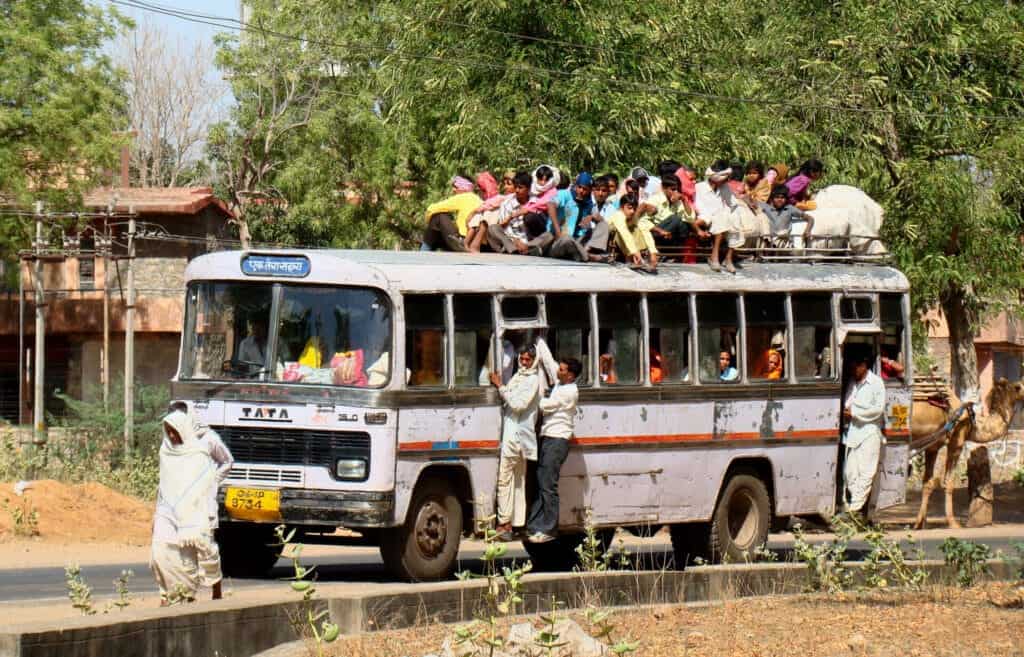
This was also behind the conceptualization of the Everyday Stories Lab this year, where we chose Urban Migration as the central theme. Recognizing that the realities and experiences of migrants in our cities mirror many of the biases and systemic failures therein, we wanted to familiarize the cohort with these and help them create narratives around the same.
The programme modules, led by members of the Oorvani team and invited experts, helped them understand the challenges and contributions of migrants. It also spurred discussions about the various triggers behind relocation from native villages/towns to cities. At the same time, the cohort was introduced to the tools and techniques that would help them uncover stories about their cities and migrant fellow citizens, which in turn could inform policy and reshape biased attitudes.
The sessions
The programme began with an orientation and introduction to the Oorvani framework for change, in which our Programme Director Satarupa Bhattacharya explained the place that citizen journalism occupies.
By documenting local issues, from lake encroachment to flooding, citizen storytellers move from being passive consumers of news to becoming the “eyes and ears” on the ground, and more importantly a voice for their communities. Senior journalist Roli Srivastava, co-founder of The Migration Story, led her session by pointing out how migrants lack support systems, face language barriers and grapple with their circumstances in the face of absent institutional support and sometimes, documentation. They build our roads and deliver our food, but lack adequate social security and recognition and are largely treated as the extras of urban society. She also called on the cohort to notice how stories of migration have been conveyed through cinema, music and art through the ages, thus alerting participants to the fact that migration is not a new or recent phenomenon, and that there are many layers to it.
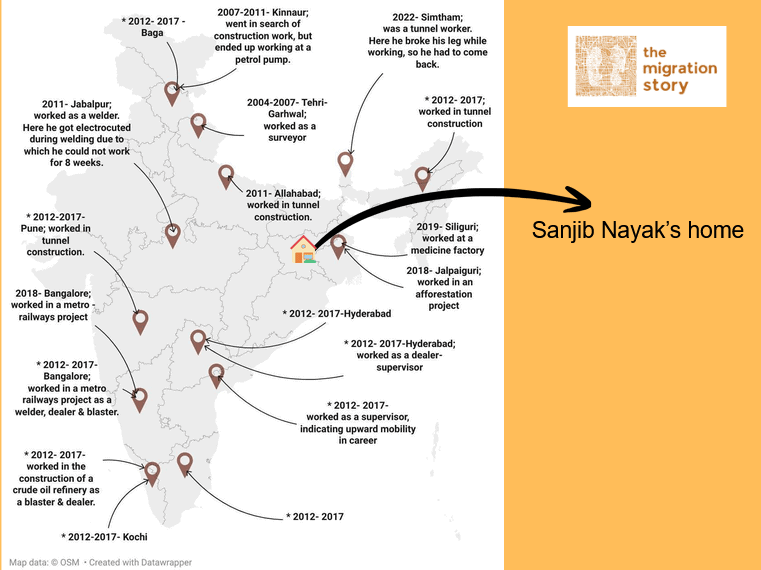
Describing an issue or critiquing realities does not have the same effect as centering a story around the humans affected by those issues and realities. Shalini Singh, co-founder and Trustee at the People’s Archive of Rural India (PARI), went deep into this nuance in a very interactive session. She emphasized that a storyteller must surrender to another person’s experience through deep listening and build a rapport over time. It was important to treat humans not merely as groups or sources, but as individuals whose situations and personal stories are all different and unique.
Rahul Vinay from Oorvani conducted a session explaining the vital technical aspects of photography: the techniques of framing an image, the right lighting to use, positioning the subject within the image and the importance of ‘audio’ in the audio-visual.
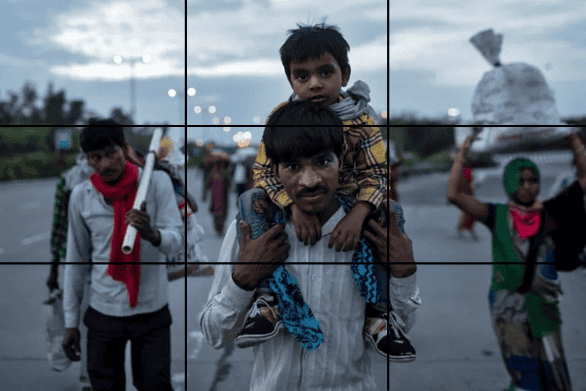
One of the most well received sessions was a guest talk by veteran photographer-storyteller M S Gopal of MumbaiPaused. Through fascinating anecdotes and projects, Gopal showcased the power of photography as a quiet habit that tells the loudest stories. He encouraged slow journalism, where photographers return to the same spots repeatedly to replace novelty with familiarity and trust. By noticing everyday patterns — such as the specific deities migrants bring to the city, or the kind of bags they carry — photographers can document the pulse of a neighbourhood or capture the essence of any topic far more effectively than those who merely helicopter in for a quick shot.
Looking ahead
Emerging from these multiple sessions were a set of great story pitches, that cohort members penned down in a live concluding session, guided by editors and journalists at Oorvani Foundation. They are currently in the process of finishing their ground work, research and writing. Watch out for these insightful narratives and essays on Citizen Matters over the coming weeks.